
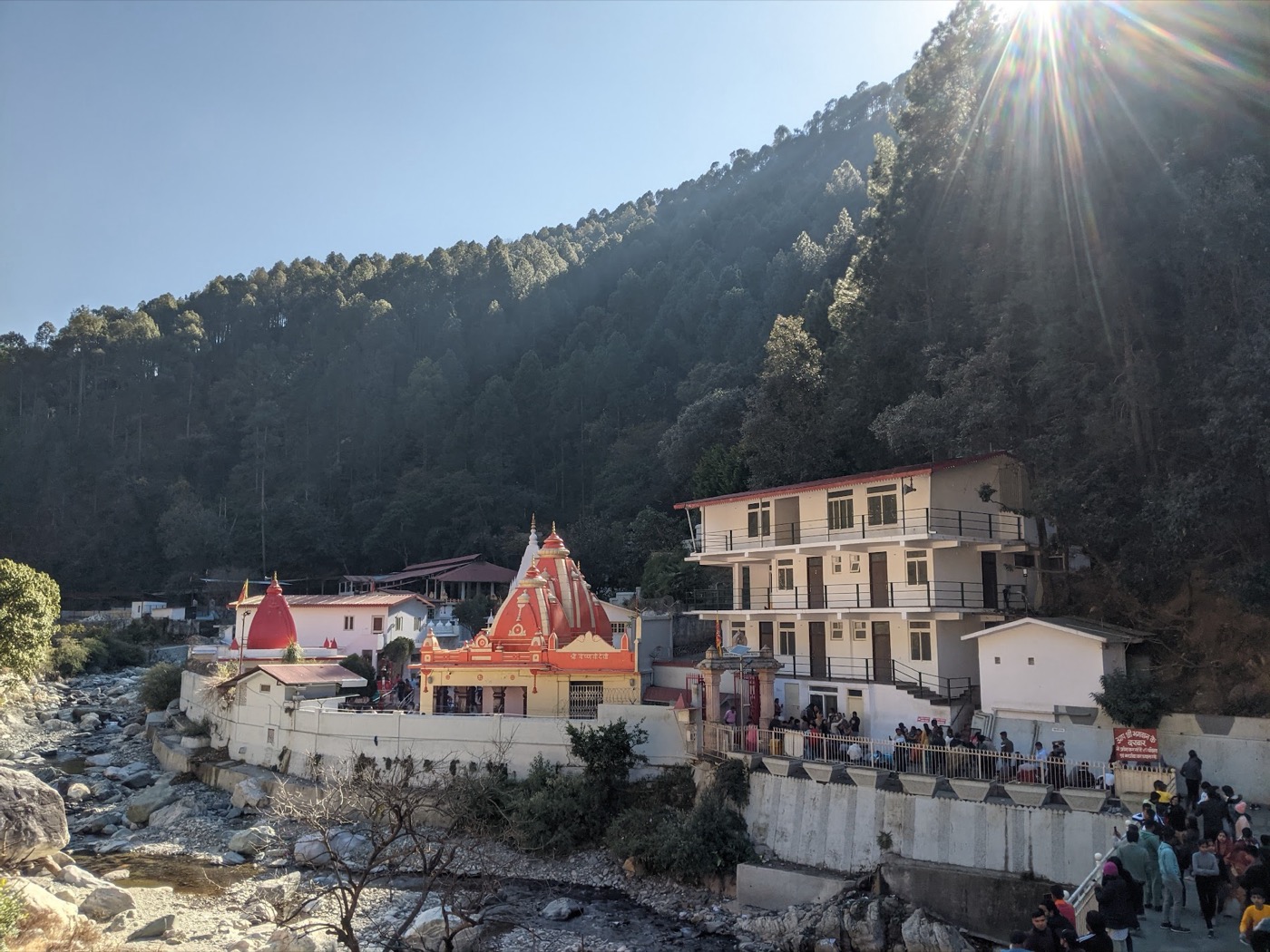
Visiting Shri Neem Karoli Baba Ashram at Kainchi Dham for the very first time is a deeply personal, sacred journey. Whether drawn by stories of Steve Jobs, Mark Zuckerberg, and Julia Roberts, or inspired by the devotional writings of Ram Dass and Krishna Das, pilgrims arrive seeking inner peace, divine love, and unconditional grace. Here is everything you need to know to navigate your first visit with reverence and ease.
Arrival & The Sacred Footbridge
As your vehicle approaches the hairpin bend on the Bhowali-Almora highway, the pristine white and saffron temple domes emerge beside the flowing Shipra River. The entire ashram is separated from the highway by the river, accessible only via a dedicated pedestrian suspension footbridge.
- Footwear Deposit: Before crossing the bridge, deposit your shoes and socks at the free, managed footwear counter (Joota Ghar). You will be handed a brass token. Walking barefoot across the cool suspension bridge is a traditional preparatory transition into the sacred sanctum.
- Cloakroom for Bags: If you are carrying backpacks, large bags, or electronic gadgets, safely store them at the adjacent cloakroom counter.
- Washing Hands & Feet: Clean mountain water taps are provided at the entrance to wash hands and feet before entering the inner courtyard.
Temple Layout: Shrines to Visit in Order
Upon stepping through the ornate wooden archway, follow the traditional clockwise pradakshina (circumambulation):
1. Lord Hanuman Temple (The First Shrine)
The golden deity of Lord Hanuman was the first consecrated shrine installed by Baba Maharaj Ji in 1964. Devotees offer humble pranams, touch the threshold with devotion, and receive sacred charanamrit or chandan tilak on their foreheads.
2. Lord Shiva & Vaishno Devi Shrines
Adjacent to the central courtyard stands the white marble temple of Lord Shiva and Goddess Vaishno Devi. Reciting the Maha Mrityunjaya mantra or offering silent prayers here is considered immensely potent.
3. Maharaj Ji's Sacred Kutir (Living Quarters)
Located on the upper tier of the courtyard is the humble wooden room where Baba Maharaj Ji lived when staying at Kainchi. Inside sits Maharaj Ji's wooden cot (Takht) covered with his beloved plaid woolen blanket. Although entry inside the room is restricted, large glass windows allow pilgrims to take intimate, moving darshan of Baba's physical seat.
4. The Mahasamadhi Temple
The quiet heart of the ashram, consecrated over Maharaj Ji's Mahasamadhi site following his departure in 1973. Devotees sit in silent dhyan (meditation) along the marble floor. Spending at least 20 to 30 minutes in quiet contemplation here is the core highlight of visiting Kainchi Dham.
Ashram Timings & Daily Routine (2026)
- 6:30 AM: Ashram outer gates open for the morning.
- 7:00 AM – 7:30 AM: Morning Kakad Aarti (a deeply inspiring, rhythmic chanting of prayers).
- 12:00 PM – 2:00 PM: Sanctum doors close for midday bhog and rest. Visitors can sit quietly in the outer gardens or explore Bhowali.
- 6:00 PM – 6:45 PM: Evening Sandhya Aarti (time shifts slightly with seasonal sunset).
- 7:00 PM (Winter) / 7:30 PM (Summer): Final temple gate closure for the night.
The Four Golden Etiquette Rules
- Zero Photography Inside Shrines: Photography, selfies, and video recording are strictly prohibited inside the inner temple grounds. Respect this boundary to preserve the sanctity of prayer.
- Devotional Silence: Keep conversation in hushed whispers. Silence your mobile phones completely before stepping onto the footbridge.
- Modest Clothing: Wear respectable traditional Indian clothing. Avoid shorts, sleeveless tank tops, or beachwear.
- No Commercial Solicitations: Kainchi Dham accepts zero money for darshan, queue VIP tickets, or online blessings. Beware of fake touts or digital donation scams outside the premises.